Upright bikes for errands under three miles, covering fit, gearing choices and what a few years of ownership adds up to
One speed, three speeds, or seven? Let the hills on your actual route decide
First ride felt wrong? How to check saddle height, reach and standover before you blame the bike
A step-by-step check of inseam, saddle height and reach on a pedals-forward upright bike, and which fit complaints a stem or seatpost swap can actually fix.
Buying a used upright for $150? Here's what wears out first and what three years actually costs
A forensic walk through the consumables on a comfort bike, the damage that makes a cheap used frame not worth rescuing, and the checks to make before money changes hands.
Short trips, flat streets, a bag of groceries. When an upright bike is the cheaper answer
Swept bars and a feet-forward seat tube are a set of engineering choices, not a look, and trip length, grade and load decide whether they pay you back.
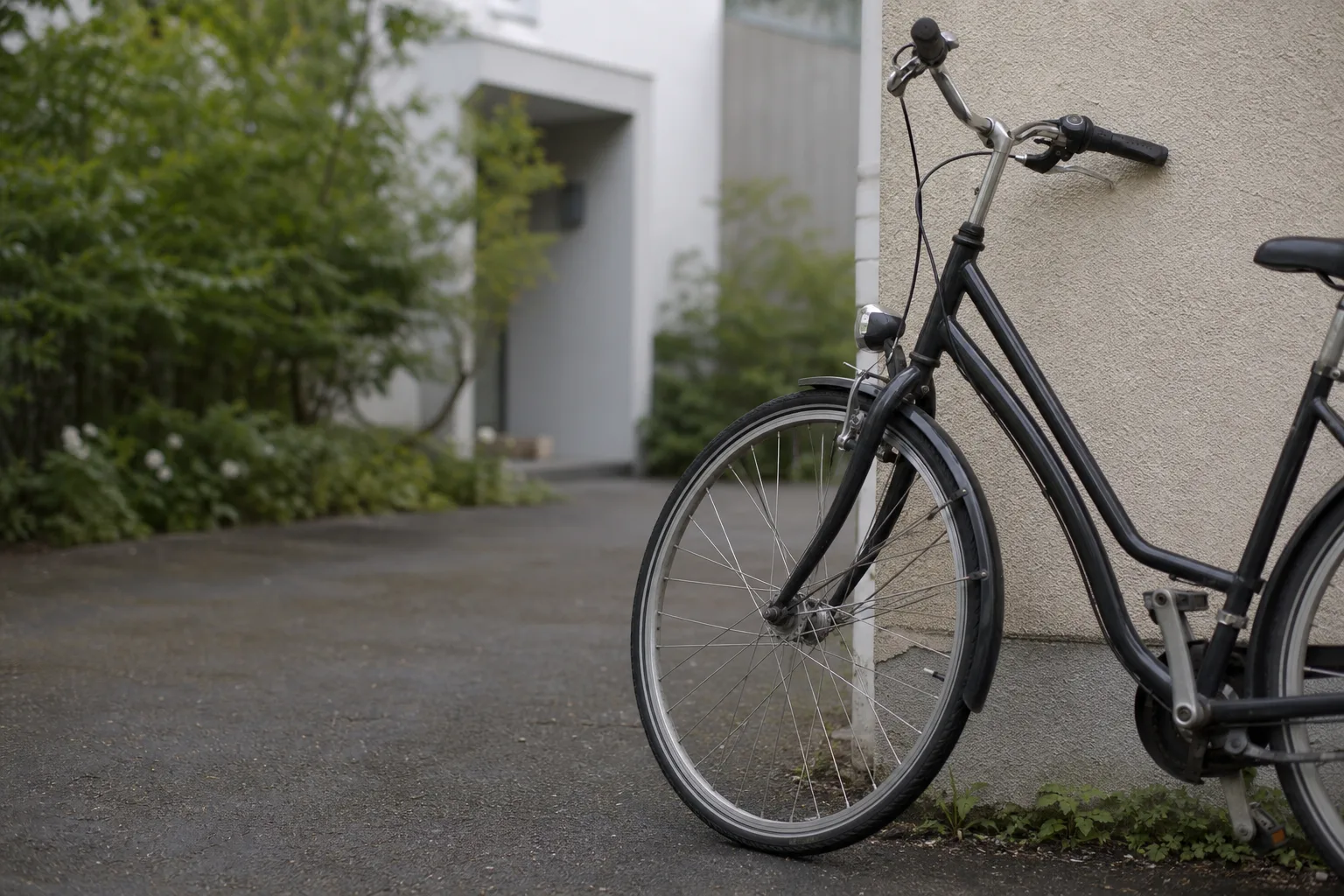
Ride your actual daily trip once on any bike and mark the spots where you stand on the pedals or slow to walking pace. The steepest hundred yards, not the average grade, sets how many gears you need.
The bike in question was a borrowed step-through with 700x38 tires, a 44-tooth chainring, an 18-tooth cog and a Shimano coaster hub, ridden to a grocery store nine tenths of a mile from the house. That gearing works out to roughly 66 gear inches, which is a pleasant, slightly long single speed on flat pavement and a problem on exactly one stretch of the route: a two-block rise behind the elementary school that a phone's elevation trace put at a little over six percent. Everything else on the trip was fine. That one block decided the drivetrain.
A careful reader checks the route before checking the catalog, because the number of speeds a bike needs is set by its worst hundred yards and by how heavy the bike is when the panniers are full, not by what the model name says. Ride the trip once on anything and note where you stand on the pedals, where you slow to walking speed, and where you would rather be coasting with your hands near the levers. Those three notes settle most of the argument. The rest is maintenance appetite and money.
One speed and a foot brake, and what it genuinely covers
A coaster hub is the lowest-attention drivetrain sold. There are no cables, no shifter, no derailleur hanger to bend in a bike rack, and the braking surface is inside a sealed shell where rain never reaches it, which is why coaster bikes stop identically in August and in a February downpour. The Consumer Product Safety Commission oversees the braking requirements that bicycles sold in the United States have to meet, and foot-operated coaster brakes have long been part of that landscape on kids' bikes and simple utility bikes alike. The practical limit is not stopping. It is starting again on a grade with a bag of groceries on the rear rack.
Two habits make single speed work over more terrain than people expect. Gear it lower than feels right on the showroom floor, somewhere in the high fifties of gear inches rather than the mid sixties, and accept spinning on the flat in exchange for climbing seated. And learn the coaster brake's one real quirk: you cannot backpedal to reposition the cranks before a hill start, so you set the pedal where you want it before you stop. Riders who do both stop noticing the missing gears within about two weeks.
Three or seven inside the hub
Internally geared hubs are the middle answer and, on a short-trip upright bike, usually the right one. A classic Sturmey-Archer AW three-speed spreads 177 percent across its range; a Shimano Nexus three-speed spreads about 186 percent, which turns that 66-inch single into roughly 48, 66 and 90 gear inches. That low gear is the school hill, solved. Seven-speed Nexus hubs widen the range to around 244 percent with closer steps between them, and eight-speed Alfine hubs push past 300 percent, which is genuine hill-country range in a sealed housing you shift while stopped at a light.
The maintenance trade is straightforward. A hub gear has one exposed cable, one chain running in a straight line, and internals that manufacturers ask you to service on an interval measured in years or a few thousand miles rather than after every wet week. Chains last a long time on a straight chainline. Against that, the initial cost is higher than a derailleur bike of similar quality, wheel removal takes an extra step or two, and internal work is a shop job rather than a driveway job. Most owners of short-trip bikes will do a cable adjustment and nothing else for a very long time.
Seven speeds outside, and what it asks in return
A seven-speed derailleur with an 11-34 cassette covers about 309 percent at the cassette alone, costs the least to buy, and is repairable anywhere in the country with parts off the wall. It also lives outdoors. Salt, road grit and a chain running at an angle in the extreme gears wear chains and cogs faster, and the derailleur hanger sits exactly where bikes get knocked over. Budget a chain check every few hundred miles with a wear gauge, a cable and housing refresh when shifting turns vague, and a cassette when the chain has been ridden past 0.75 percent stretch.
Steel rims in the rain, which is the part to check first
Rim brakes on chrome-plated steel rims are the one specification that changes a buying decision on its own, because wet steel gives up far more of its dry stopping power than wet aluminum does, and the first second or so of lever pull mostly just wipes water off the rim before anything bites. Squeeze the levers on a test ride, then look at the rim: a machined, dull-gray aluminum braking surface is what you want, and a bright mirror finish is the warning. Aluminum rims, or a coaster or drum or disc brake that ignores the rim entirely, all solve it. A wheel rebuild onto aluminum rims is a normal shop job and often the best money spent on an otherwise sound bike.
Ride the hill, count the gears you actually reach for, look at the rim, then buy. The bike that came home from that grocery run ended up with a three-speed hub and aluminum rims, and the school hill stopped being part of the conversation.